



The latest breakdown of current grid composition by Central Electricity Authority (CEA) shows that as of mid-2026, India’s total installed power generation capacity has crossed a milestone of 537 GW. This historic shift shows a mix of non-fossil fuel sources making up roughly 52.3% of total capacity generated leaving fossil fuel generation at 47.7% mark.
But generation alone doesn’t solve the underlying structural problem that’s quietly affecting the financial viability of the entire energy sector leaving the developers caught in the crosshairs.
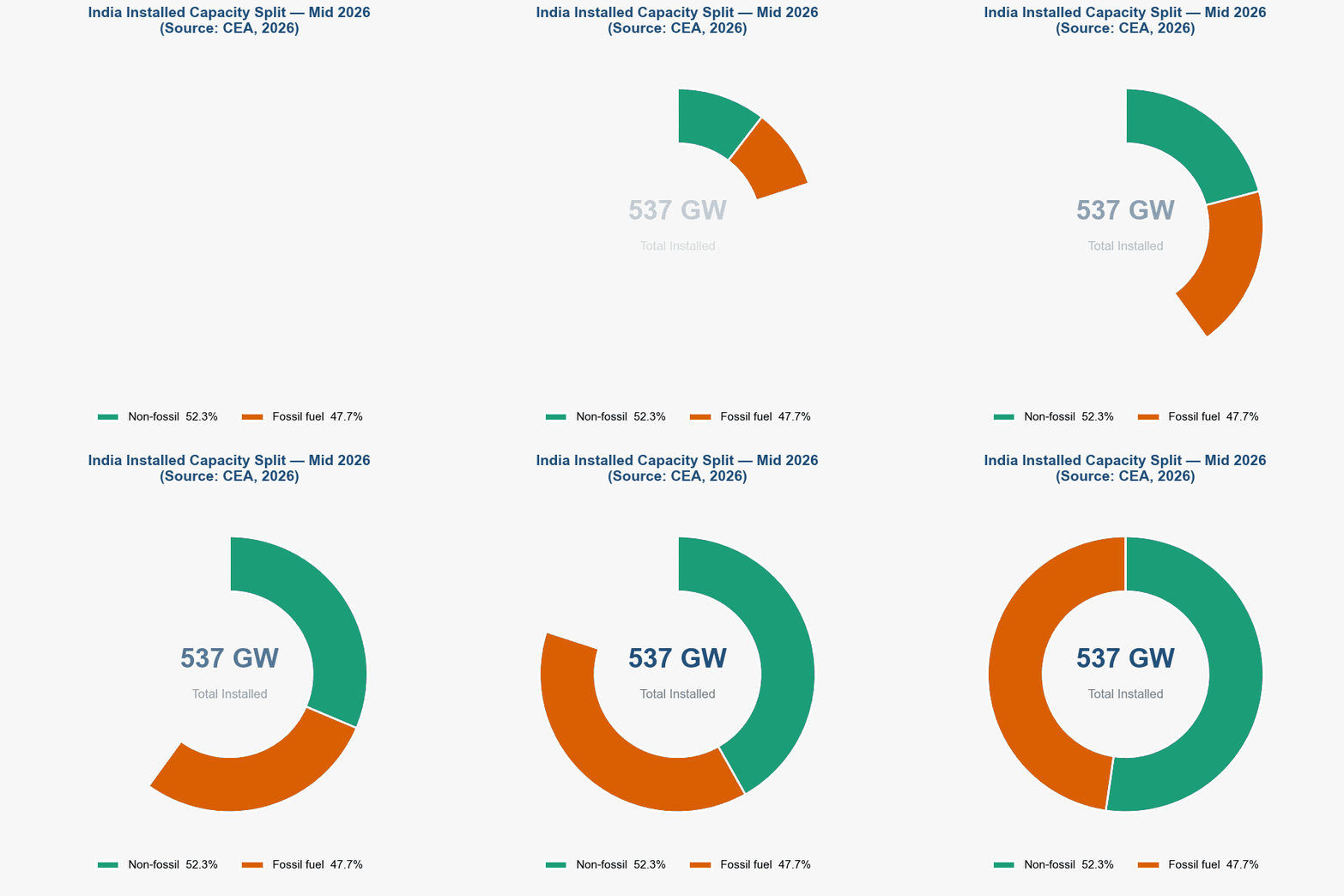
Figure 1-1 India’s installed capacity split — non-fossil vs fossil, mid-2026 (Source: CEA, 2026)

Figure 1-2: Source-wise breakdown of India’s non-fossil installed capacity, mid-2026 (Source: CEA, 2026)
The growth trajectory is equally telling. Non-fossil installed capacity has more than doubled since 2018, growing from roughly 115 GW to over 280 GW, while fossil fuel capacity has remained largely flat. This divergence signals a structural change in India’s energy mix rather than a cyclical one.
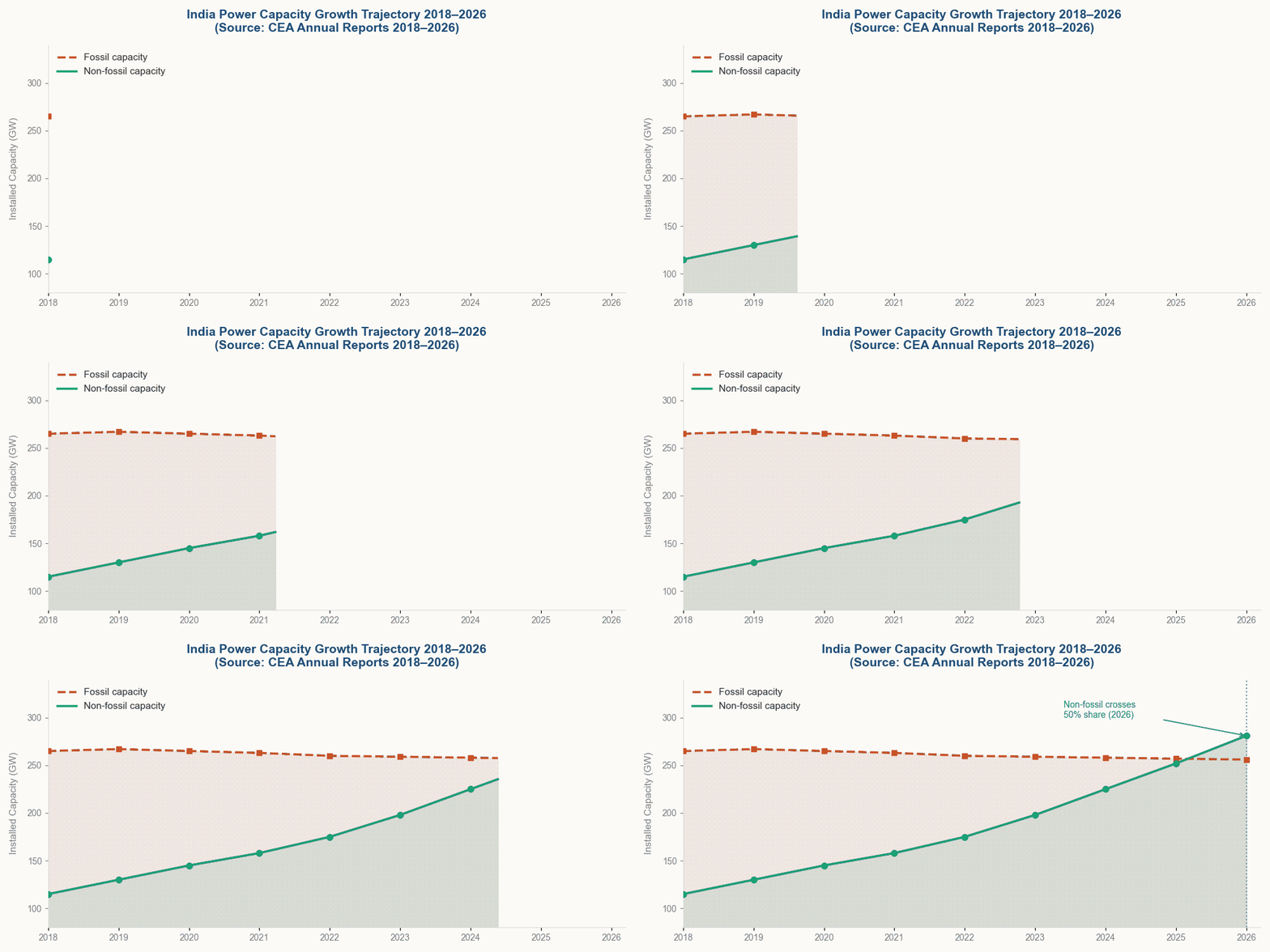
Figure 1-3: India’s power capacity growth trajectory 2018–2026 (Source: CEA Annual Reports 2018–2026)
1.1 Grid Congestion Challenges in India’s Renewable Energy Sector
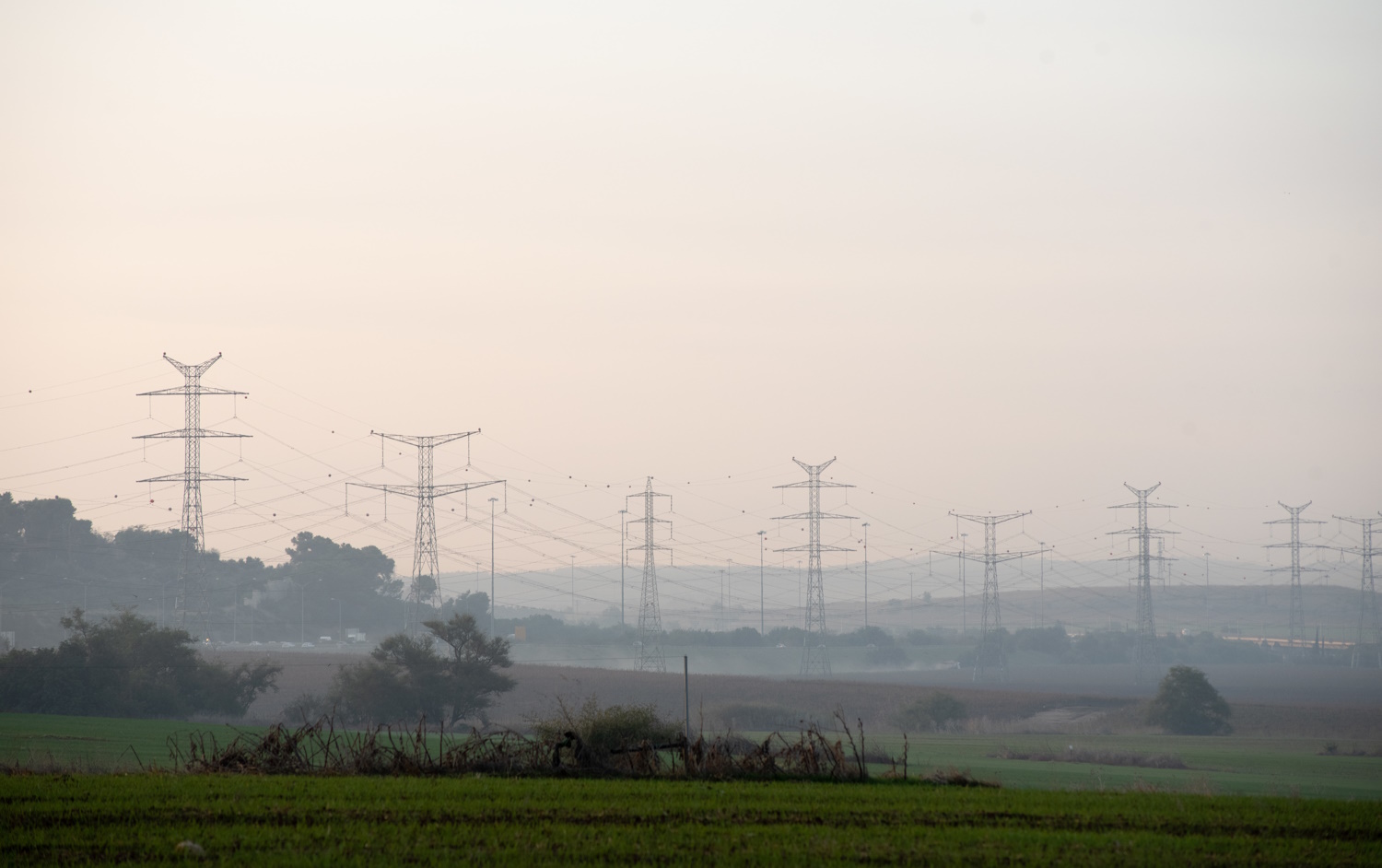
The transmission infrastructure has clearly struggled to keep pace with the rapid acceleration of generation capacity. As per the Central Electricity Regulatory Commission (CERC) data, 31.8 GW of allocated transmission connectivity is currently underutilised due to project delays and evacuation bottlenecks. More critically, over 50 GW of renewable energy capacity is either stranded or operating under evacuation constraints.
Developers of renewable energy rich states like Rajasthan and Gujarat are hit the most due to grid congestion, delayed evacuation approvals and renewable energy curtailment issues. Key 220 kV and 400 kV transmission corridors are increasingly congested, resulting in power curtailment, reduced plant utilisation factors, and growing pressure on project revenue.
With India’s peak power demand breaching an unprecedented 270 GW this summer, the gap between raw generation capacity and actual grid-ready dispatch has only grown wider and economically damaging.
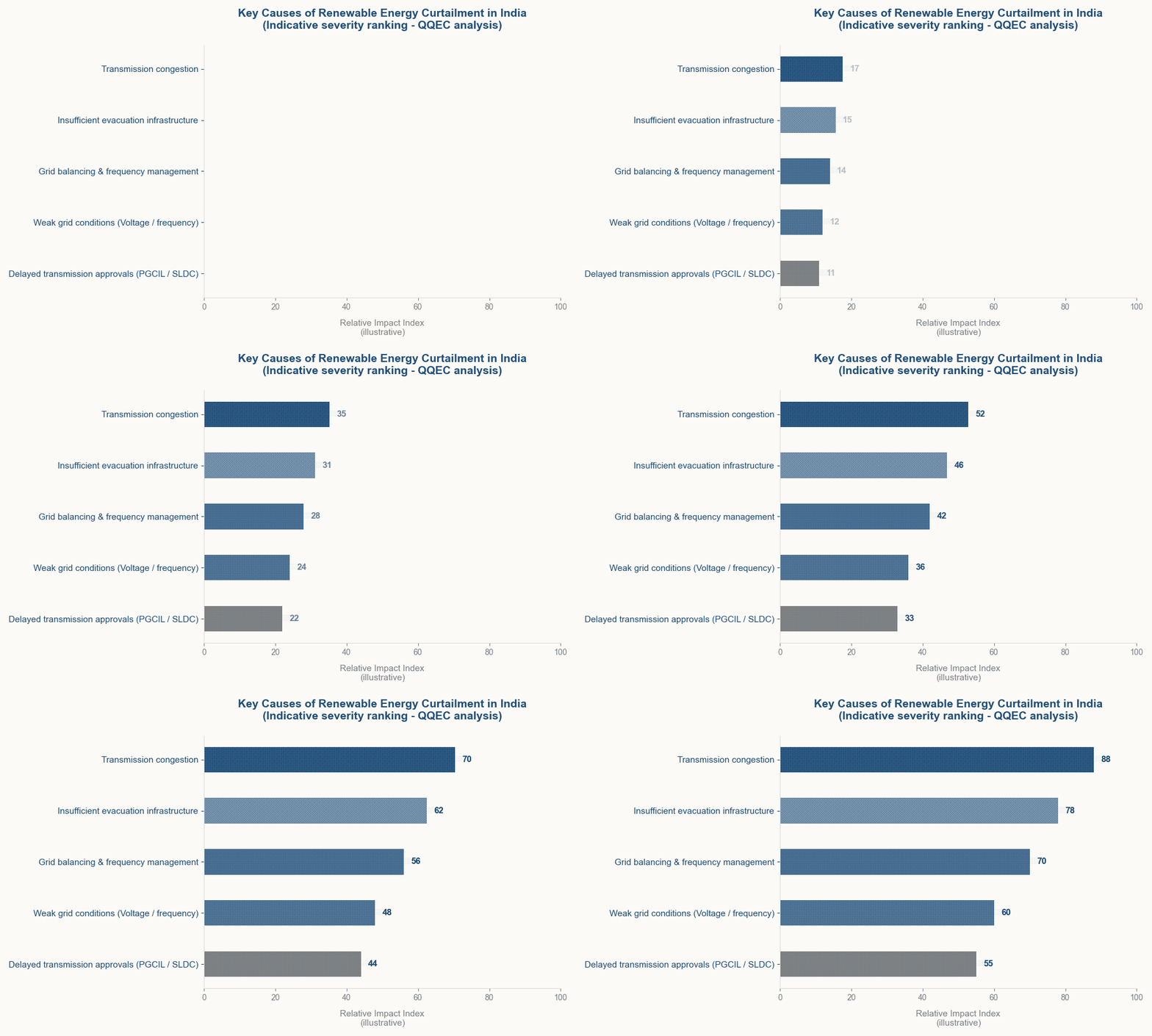
Figure 2-1: Key causes of renewable energy curtailment in India, ranked by relative impact (QQEC analysis; index is illustrative)
1.2 Causes of Renewable Energy Curtailment in India
Renewable energy curtailment happens when solar and wind developers are forced to cut back their generation even when they have the potential to produce more. This results from multiple interrelated grid and infrastructure shortcomings that compound one another.
- Transmission congestion is the most prominent one where transmission lines are already carrying heavy loads leaving no room for the transmission of renewable energy.
- Insufficient Evacuation Structure in remote renewable energy rich locations with inadequate substation capacity or lack of high voltage transmission lines at renewable energy injection point.
- Grid Balancing and Frequency Management has become another challenge with increasing RE penetration levels as solar and wind are highly variable in nature that put operators at tough frontline to maintain real-time balance between supply and demand.
- Weak-Grid Conditions with voltage fluctuations and frequency deviations make it difficult for renewable generators to maintain stable grid connection, further increasing curtailment events.
- Delayed Transmission Approvals from Power Grid Corporation of India Limited (PGCIL), coordination with State Load Dispatch Centres (SLDCs) and inter agency clearing processes frequently become the major underlying causes for transmission curtailments.
Curtailment erodes Internal Rates of Return (IRRs), weakens Debt Service Coverage Ratios (DSCR), and puts long-term Power Purchase Agreement (PPA) viability at risk. At scale, it undermines lender confidence and makes project financing more expensive across the entire sector.
2 BESS: A Key Enabler of India’s Grid Stability
In India’s energy transition BESS will play a vital role owing to its capability of storing excess renewable energy during periods of low demand or transmission congestion. This temporal flexibility transforms an intermittent, grid-constrained resource into a dispatchable, high-value asset.
Grid-connected BESS projects deliver value across multiple dimensions simultaneously with its ability to manage peak load, potential to deliver during evening high evening peak and morning peak thereby improving both the revenue realization and grid balance.
It empowers developers and operators to deliver round-the-clock renewable integration and power supply by providing them relief from transmission congestion and balancing services like frequency regulation and ancillary services due to its black start and grid forming abilities.
Reactive power management is another versatile feature of BESS that helps in long-distance, high-renewable corridors like those in Rajasthan and Gujarat.
2.1 Case Study: Gujarat’s Landmark 445 MW / 890 MWH BESS Portfolio by QQEC
QQEC took this opportunity and acted as a Technical Consultant for a bankable Detailed Project Report (DPR) covering a 445 MW / 890 MWh grid-connected BESS portfolio across three independent installations in Gujarat-each connected to Gujarat Energy Transmission Corporation (GETCO) substations through high-voltage transmission infrastructure.
The portfolio spans three strategically selected sites:
- Shelavadar – Connected to the GETCO 220 kV substation
- Wagra – Connected to the GETCO 220 kV substation
- Valia – Connected to the GETCO 132 kV substation
By distributing the portfolio across multiple grid injection points, the project avoids concentrating risk at any single transmission corridor that becomes crucial for long term operational reliability.
Table 4-1: Technical Specifications of the Project
| Parameter | Specification |
|---|---|
| Contract Capacity | 445 MW / 890 MWh |
| Installed Capacity | 540 MW / 1,080 MWh |
| Storage Duration | 2 hours |
| Daily Cycles | 2 full charge – discharge cycles |
| AC – to – AR Round-Trip Efficiency | Greater than 85% |
| System Stability | Greater than 95% |
To ensure contracted obligations can be met reliably over a period of 12 years. The installed capacity of 540 MW / 1,080 MWh is deliberately sized above the contracted level to account for system losses, degradation over project life and availability buffer.
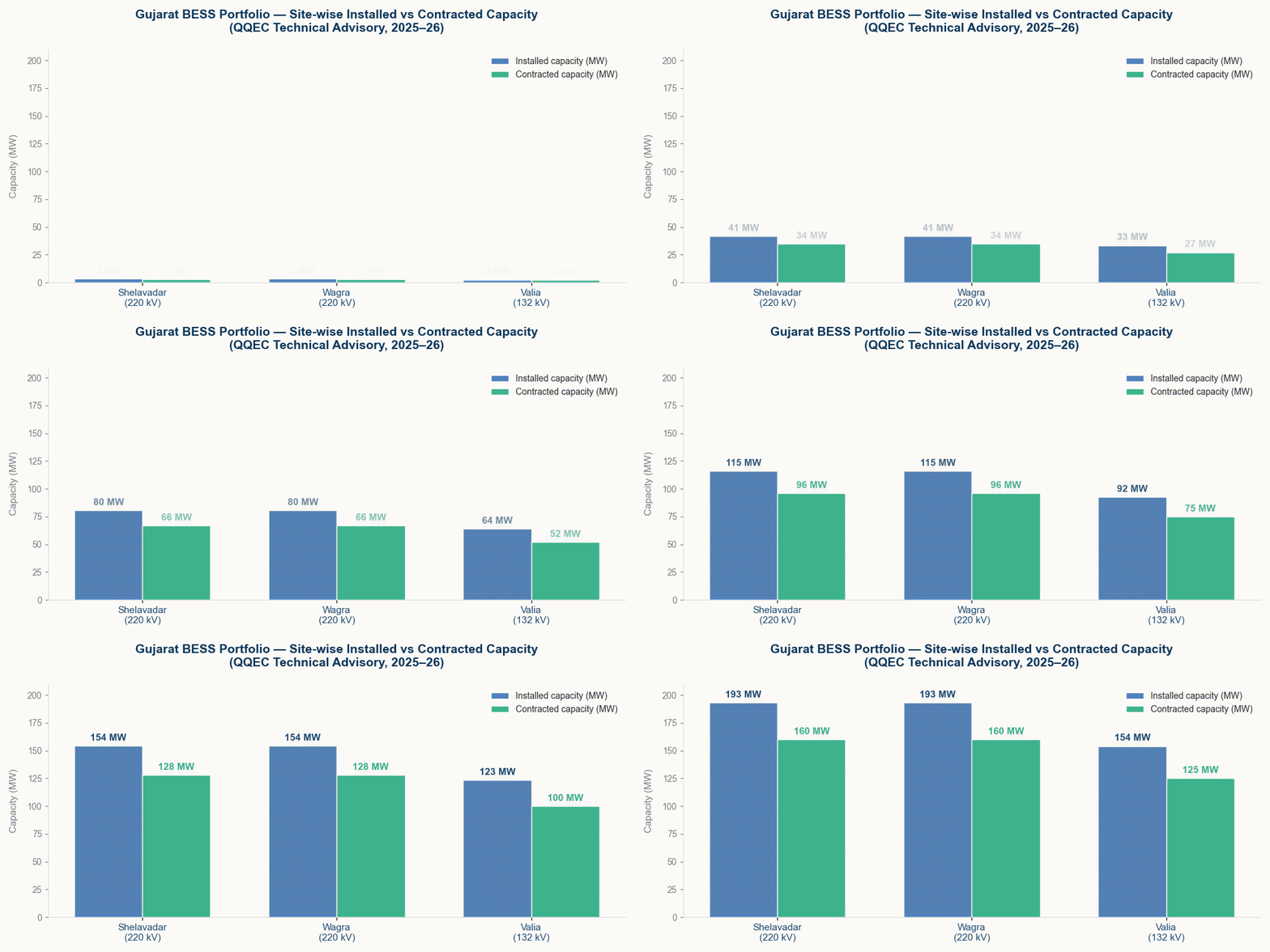
Figure 4-1: Site-wise installed vs. contracted capacity across Gujarat’s three BESS installations (QQEC Technical Advisory, 2025–26)
The combination of contracted revenue, VGF support, and rigorous technical design makes this portfolio a benchmark for how BESS projects in India can achieve both grid impact and commercial sustainability simultaneously.
3 QQEC’s Solution to Renewable Power Evacuation Challenges
3.1 QQEC’s Role in Gujarat’s BESS Portfolio
QQEC’s technical advisory work on Gujarat’s three-site BESS portfolio across Shelavadar, Wagra, and Valia shows what it genuinely takes to move a utility-scale storage project from an idea on paper to something a bank will actually finance.
3.2 Strategic Siting
The three sites were not chosen at random. Each one sits next to an existing GETCO substation, placing the batteries precisely where grid congestion tends to build up. Rather than letting surplus renewable power pile up at a bottleneck, it gets absorbed on the spot and released during peak demand hours when the grid needs it most. The timing problem that causes curtailment is addressed before it has a chance to develop.
3.3 Reliable Grid Connection
At every site, QQEC engineered a complete high-voltage evacuation system stepping power up from 33 kV to 220 kV. Grid operators and lenders don’t simply want storage capacity; they want storage capacity they can depend on, and the design was built with that expectation in mind.
3.4 Grid Controlled Operation
The BESS takes its instructions entirely from the State Load Dispatch Centre through the EMS Energy Management System. Charge and discharge schedules, ramp rates, and live telemetry flow through a single coordinated digital layer. From where the grid operator sits, the system doesn’t feel like an external asset being managed around. It feels like part of the grid itself.
3.5 Replacing what Thermal Plants Once Provide
Retiring a thermal plant removes more than megawatts. It removes the inertia, voltage stability, and frequency support that large spinning generators naturally provide. As Gujarat’s generation mix shifts, those qualities become increasingly difficult to source. QQEC addressed this by specifying Power Conversion Systems with four-quadrant reactive power control, grid-forming capability, frequency and voltage droop response, and Low Voltage Ride-Through, giving the BESS the ability to step into the stabilising role that thermal units once filled.
3.6 Accounting for Degradation from Day One
Batteries lose capacity over time, and a system sized precisely to its contracted output will eventually fall short of it. QQEC built the answer to this into the original design. Installed capacity of 540 MW / 1,080 MWh sits deliberately above the contracted output of 445 MW / 890 MWh. That buffer absorbs the effects of degradation, thermal derating, and conversion losses across the full 12-year operating period, so what was promised to the grid keeps being delivered, year after year.
3.7 Conclusion
The Gujarat BESS portfolio reflects what QQEC does at its best, connecting rigorous technical design with real-world commercial requirements. From choosing the right locations to structuring a project that financiers could get behind, the work demonstrated that solving grid congestion and making a project investable are not two separate problems. Handled well, they are one and the same.
4 References
[1] Central Electricity Authority (CEA). (2026, May). Growth of Electricity Sector in India from 1947–2026. Ministry of Power, Government of India. https://cea.nic.in
[2] Central Electricity Regulatory Commission (CERC). (2026, January). Report on Short-Term Open Access and Transmission Congestion. https://cercind.gov.in
[3] Ministry of Power, Government of India. (2025, June). India Sets New Peak Power Demand Record of 270 GW. https://powermin.gov.in
[4] Power Grid Corporation of India Limited (PGCIL). (2025). Transmission System for Integration of 500 GW RE Capacity by 2030: Green Energy Corridors Phase III. https://powergrid.in
[5] Central Electricity Authority (CEA). (2023). Draft National Electricity Plan 2023–2032: Volume I Generation. https://cea.nic.in
[6] Ministry of New and Renewable Energy (MNRE). (2024). Annual Report 2023–24. https://mnre.gov.in[7] CERC. (2024). Connectivity and General Network Access to the Inter-State Transmission System Regulations, 2022 – Amendment Order. https://cercind.gov.in