 Skip to main content


1 Introduction
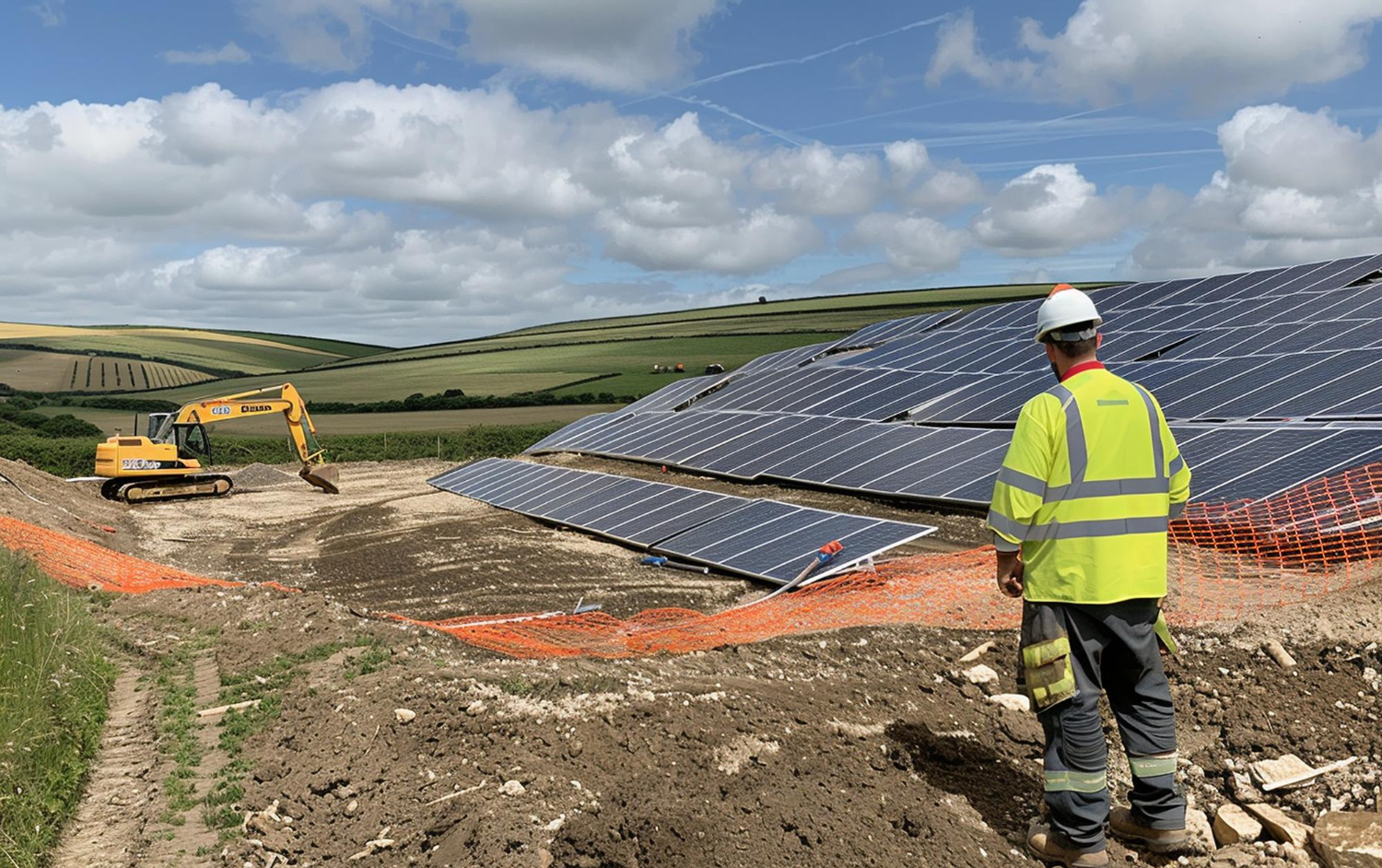
Utility-scale Solar PV Projects are often developed across large sites with varying terrain conditions, making site preparation a critical part of project development. While much attention is given to Solar PV Module efficiency and energy generation, the success of a solar project also depends on how effectively the site is graded for construction and long-term performance.
Proper site grading ensures:
· Stable and constructible Module Mounting Structure (MMS) installation.
· Efficient surface drainage.
· Optimized earthwork quantities.
· Long-term site reliability.
Traditionally, grading solar sites required extensive manual surface adjustments and multiple design iterations, especially on irregular terrain. This process result in higher cut and fill quantity.
At QQEC we have developed more advanced grading methodology that allow engineers to develop constructible, drainage-aware grading designs more efficiently, improving both design quality and optimized cut and fill quantity i.e. optimizing overall project budget.
2 Limitations of Conventional PV Grading Tools
Many solar design platforms are primarily developed to optimize PV layout, tracker configuration, and energy yield modelling. While these tools are highly effective during early project development, the grading solutions they generate are often conceptual and not directly suitable for construction.
Several limitations are commonly observed when relying solely on these tools for PV site grading.
2.1 Irregular and Impractical Land Profiles
The resulting grading surfaces may contain abrupt grade transitions and irregular landforms that are difficult to execute using standard earthmoving equipment. These irregular profiles frequently require redesign during detailed civil engineering stages.
2.2 Higher Cut–Fill Quantities
Without robust grading logic, designs can lead to excessive earthwork quantities, increasing material movement across the site and raising construction costs.
2.3 Limited Consideration of Site-Wide Drainage
Preliminary grading solutions often focus only on adjusting terrain around PV rows and may not fully evaluate site-wide drainage behaviour, which can lead to inefficient runoff paths, water accumulation, or localized erosion.
2.4 Lack of Pile Reveal Optimization
Solar tracker systems require strict control of pile reveal heights for proper installation. Basic grading outputs may not account for these constraints, requiring further refinement during detailed engineering.
2.5 Constructability and Equipment Access Challenges
Grading designs developed without considering construction workflows may create restricted equipment access or inefficient earthmoving operations, particularly across large solar fields.
2.6 Long-Term Drainage and Erosion Risks
Poorly optimized grading surfaces may lead to erosion, sediment transport, or drainage issues, affecting long-term site stability and increasing maintenance requirements.
Because of these limitations, engineering teams often need to rework grading surfaces using advanced civil engineering tools before the design becomes construction-ready.
3 Our Engineering Approach to Solar Site Grading
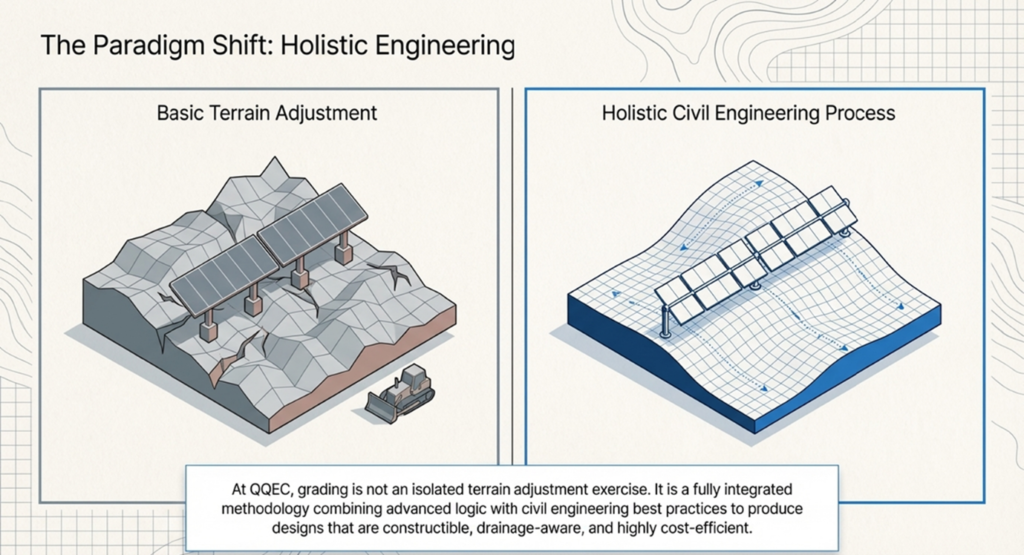
At QQEC, solar site grading is approached as a holistic engineering process rather than simply a terrain adjustment exercise.
Our workflow integrates advanced grading methodologies with civil engineering best practices to develop constructible, drainage-aware, and cost-efficient grading solutions for utility-scale solar projects.
Our approach typically includes:
3.1 Detailed Terrain Analysis
We begin with a comprehensive evaluation of the existing site topography to understand slopes, terrain variability, and natural drainage patterns.
3.2 Engineering Constraint Integration
Design constraints such as pile reveal limits, tracker installation requirements, grading boundaries and drainage considerations are incorporated into the grading design process from the outset.
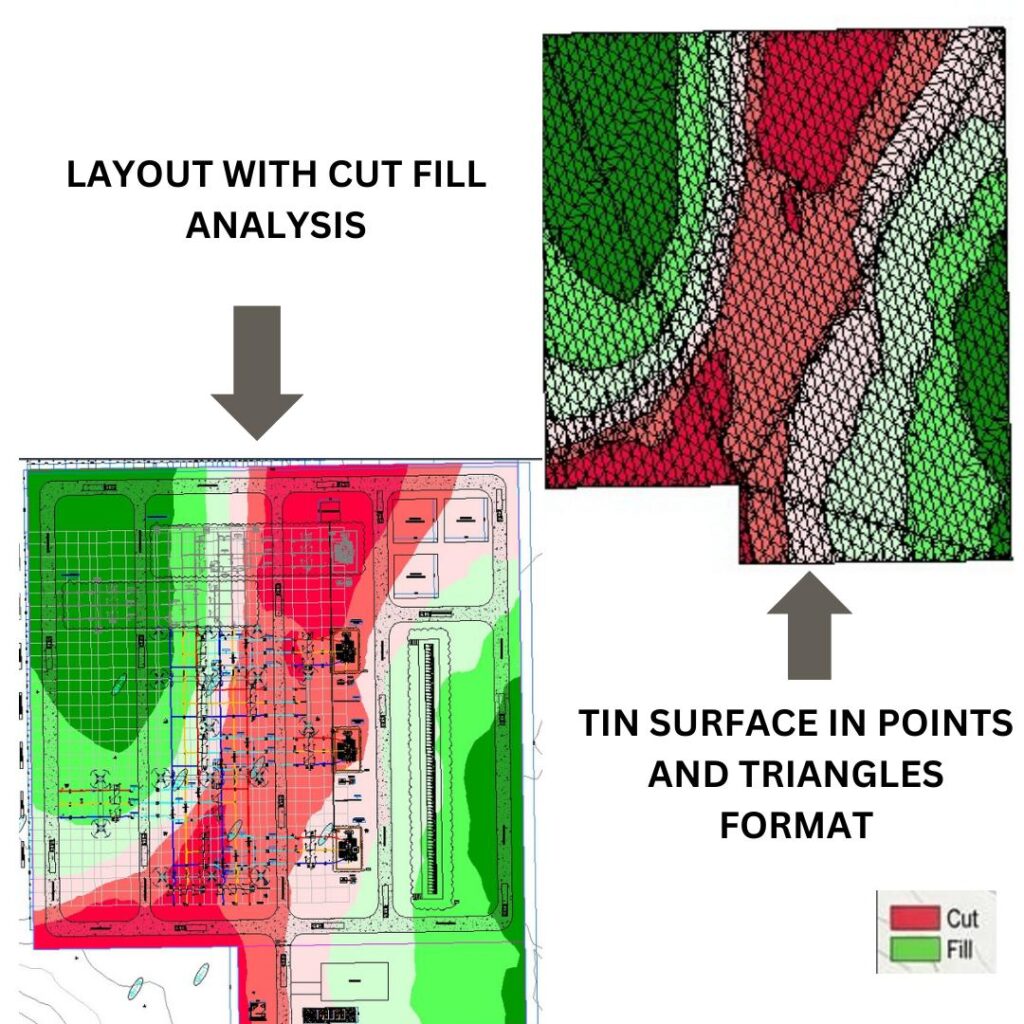
3.3 Optimized Earthwork Balancing
Cut and fill quantities are carefully balanced across the site to minimize soil movement while maintaining stable and practical grading slopes.
3.4 Drainage Aware Grading Design
Surface grading is developed to preserve natural runoff patterns and ensure efficient drainage, reducing the risk of water accumulation or erosion.
3.5 Selective Grading Strategy
Grading is applied only where necessary, preserving stable terrain wherever possible and minimizing site disturbance.
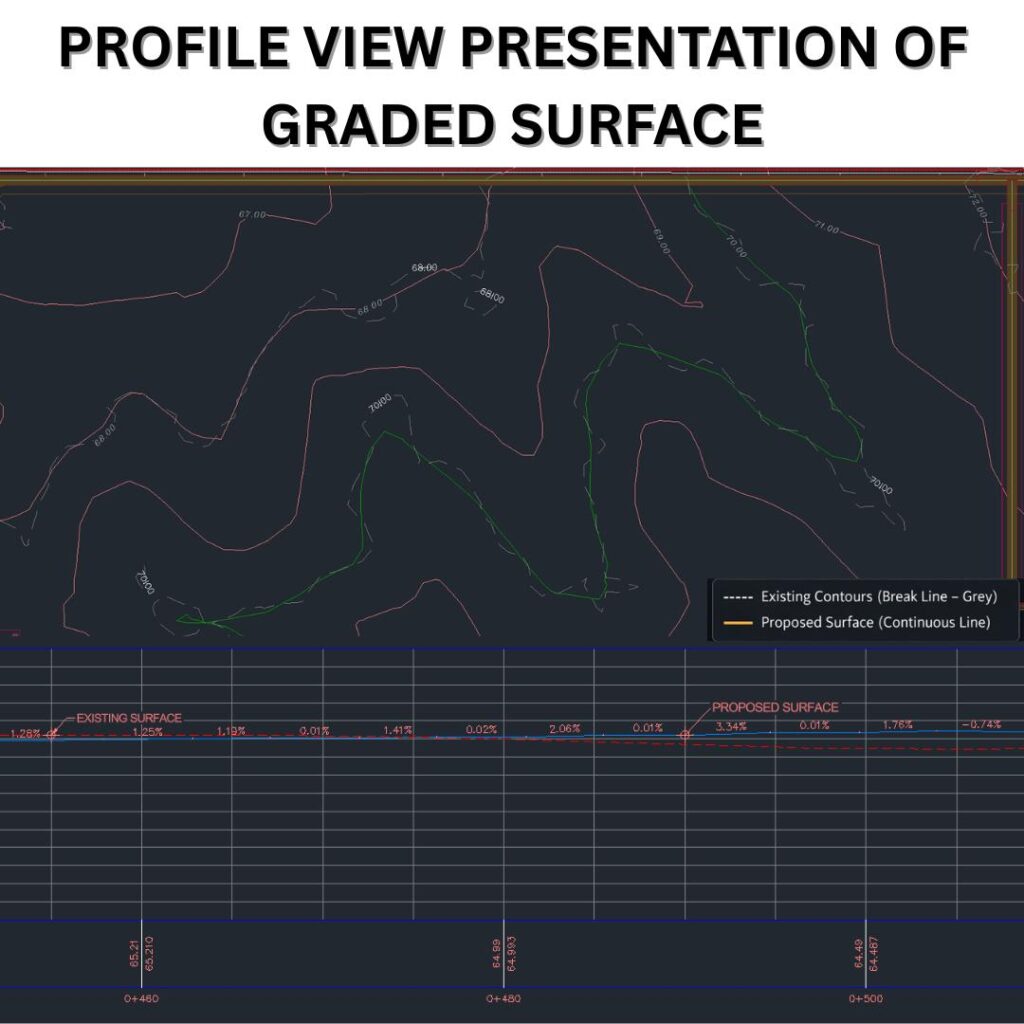
3.6 Constructible Surface Development
Grading surfaces are refined to ensure they are smooth, practical, and achievable using standard earthmoving equipment, improving construction efficiency.
3.7 Efficient Design Iterations
Advanced grading workflows allow engineers to evaluate multiple grading scenarios quickly, enabling faster design refinement and more optimized results.
This integrated approach allows us to deliver grading designs that are efficient, practical, and aligned with real-world construction requirements.
4 Real Impact for Solar Developers: Cost, Time, and Risk Reduction
For utility-scale solar projects, grading design directly influences project economics, construction timelines, and long-term operational performance.
Implementing efficient grading strategies provides several measurable benefits.
4.1 Reduced Earthwork Costs
Minimizing unnecessary cut and fill operations reduces the amount of soil movement required, which can significantly lower earthwork and transportation costs.
4.2 Improved Constructability
Well-designed grading surfaces ensure that engineering outputs can be implemented efficiently in the field, reducing delays and minimizing redesign during construction.
4.3 Reduced Construction Risk
Better grading design improves drainage performance, equipment accessibility and installation feasibility reducing the likelihood of construction challenges and change orders.
4.4 Long Term Site Stability
Proper grading supports effective erosion control and stable drainage patterns, improving long-term operational reliability of solar installations.
5 Conclusion
As utility-scale solar developments expand into larger and more topographically complex sites, grading design is becoming increasingly critical for project success.
Modern grading approaches enable engineers to develop constructible, drainage-efficient, and cost-effective grading solutions while significantly reducing design time.
For Solar Developers and EPC Contractors, this approach leads to:
· Lower earthwork costs.
· Faster project delivery.
· Reduced construction risk.
· Improved long-term site performance.
By combining engineering expertise with modern grading methodologies, solar projects can move from design to construction with greater efficiency, reliability, and confidence.
