 Skip to main content






Executive Summary
As renewable energy penetration increases, Transmission System Operators (TSOs) worldwide have shifted reactive power capability from an optional feature to a mandatory technical requirement. For modern solar PV, wind, and battery storage projects, active participation in voltage regulation at the Point of Interconnection (POI) is now essential for grid stability and project bankability.
- Mandatory Compliance: Modern grid codes strictly define leading/lagging power factor limits and reactive power “envelopes” (P-Q curves) that must be maintained under both normal and stressed conditions.
- Regional Variability: Requirements vary significantly by country—driven by grid strength and local operational philosophy. While a 0.95 leading/lagging PF is a common benchmark, countries like Kuwait (for large plants) and Iraq demand significantly higher reactive support.
- Strategic Pre-Bid Analysis: Conducting grid compliance studies during the pre-bid or early design phase is critical. This identifies whether the internal inverter capacity is sufficient or if supplemental equipment (e.g. STATCOMs, SVGs, or Capacitor Banks) is required.
- Strategic Risk Management: Early stage reactive power detection optimizes Engineering Layout optimization, Inverter vs Reactive Power Compensation device related optimization and Power Transformer capacity selection. This ensures accurate budgeting and avoiding costly design changes or retrofits during the construction phase.
Blog
Reactive power capability has become a mandatory technical requirement for grid-connected renewable energy plants and energy storage systems worldwide. With the increasing penetration of inverter-based resources such as solar PV, wind power, and battery energy storage systems, transmission system operators (TSOs) and utilities increasingly rely on these plants to actively support voltage regulation at the Point of Interconnection (POI).
As a result, modern grid codes clearly specify minimum leading and lagging power factor limits, reactive power capability envelopes, and allowable voltage operating ranges that must be satisfied under both normal and stressed system conditions. Compliance with these requirements is essential to ensure stable, secure, and reliable operation of the power system.
Based on QQEC’s extensive experience in performing grid integration and grid compliance studies, it is observed that reactive power requirements defined in grid codes vary significantly from country to country. These differences are driven by factors such as grid strength, network topology, renewable energy penetration levels, and the operational philosophy of the local system operator.
In view of this, it is imperative to thoroughly review the applicable grid code and associate reactive power requirements before initiating any power system analysis and Engineering. Early assessment of these requirements allows project developers to optimize plant configuration and avoid costly design changes or retrofits at later stages of the project lifecycle.
For utility-scale renewable energy projects ranging from MW to GW capacity, it is strongly recommended that reactive power and grid compliance studies be conducted at an early project stage. This enables developers to identify the optimal inverter capacity and any additional reactive power compensation equipment—such as SVGs, STATCOMs, or capacitor banks—required to meet grid code compliance. Early analysis also supports accurate project budgeting, financing, and risk management.
Leveraging QQEC’s global experience in delivering grid compliance studies across multiple regions, we possess a deep understanding of country-specific grid code requirements. This expertise enables us to effectively support clients during the pre-bid advisory phase, as well as throughout the Lender’s Engineering and Owner’s Engineering stages, ensuring technical compliance, regulatory approval, and overall project bankability.
Below Table demonstrates reactive power requirement of different countries wherein QQEC have delivered Pre-Bid Advisory, Pre-Bid Engineering, Owner’s Engineering, Lender’s Engineering and Grid Compliance Studies:
| Sr. No. | Country | Power Factor requirement at POI for Renewable Plant | Reactive Power requirement at POI | PQ Curve |
| 1 | India | 0.95 lagging to 0.95 leading | +33% to -33% of rated active power | 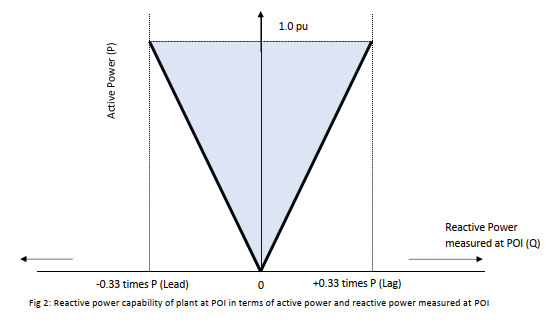 |
| 2 | ERCOT (Texas, USA) | 0.95 lagging to 0.95 leading | +33% to -33% of rated active power | 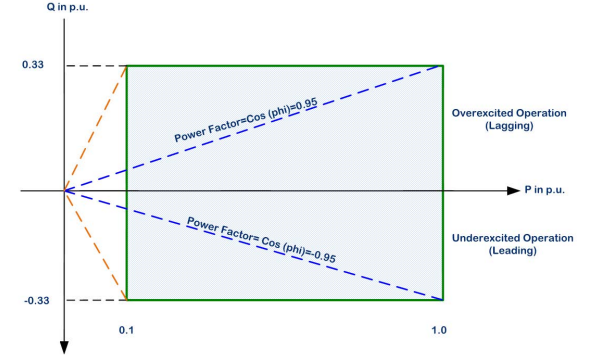 |
| 3 | England | 0.95 lagging to 0.95 leading | +33% to -33% of rated active power | 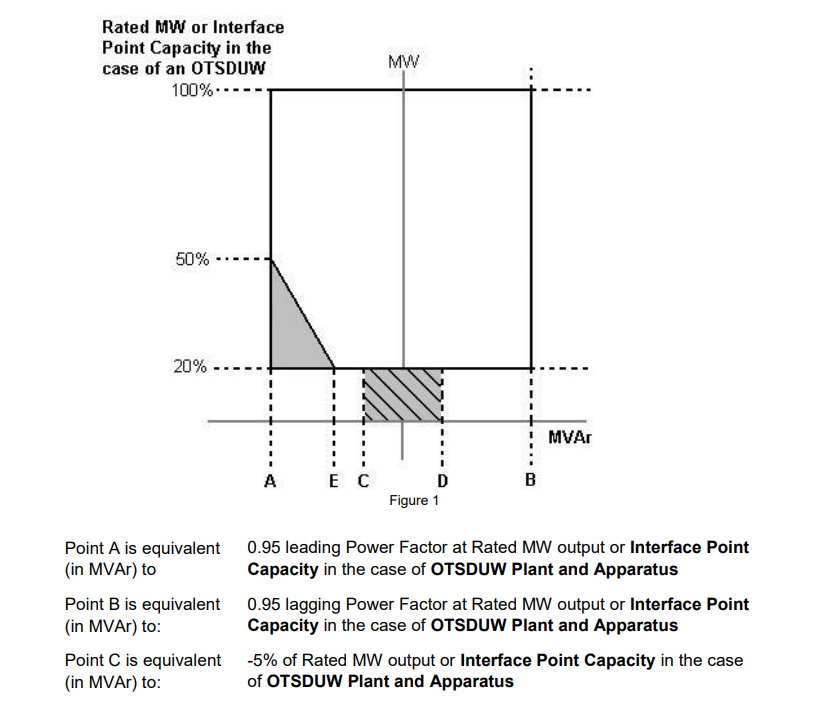 |
| 4 | Kingdom of Saudi Arabia | For renewable PPMs :0.95 lagging to 0.95 leading | +33% to -33% of rated active power | 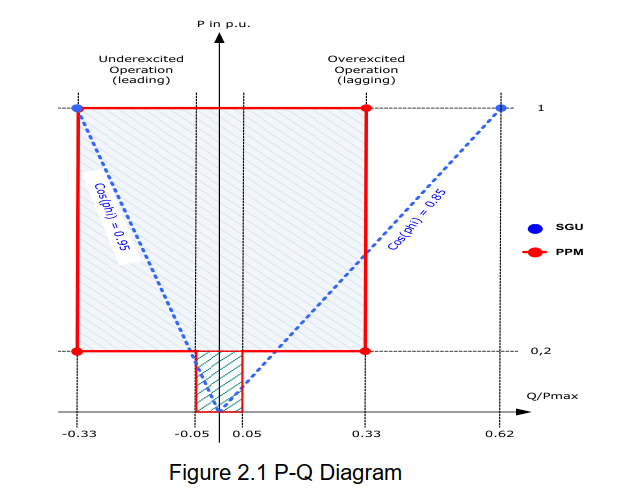 |
| 5 | Iraq | 0.9 lagging to 0.95 leading | +48% to –33% of rated active power | 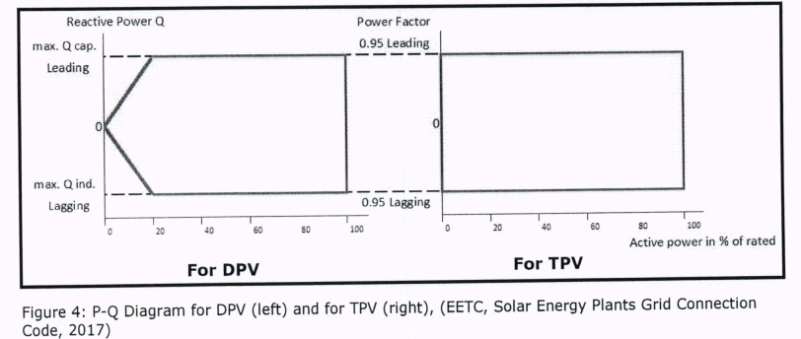 |
| 6 | Kuwait | 1)For Plant with capacity up to 300 MW: 0.95 lagging to 0.95 Leading2) For Plant with capacity more than 300 MW: 0.85 lagging to 0.95 Leading | 1)For Plant with capacity up to 300 MW: +33% to -33% of rated active power.2) For Plant with capacity more than 300 MW +62% to -33% of rated active power. | 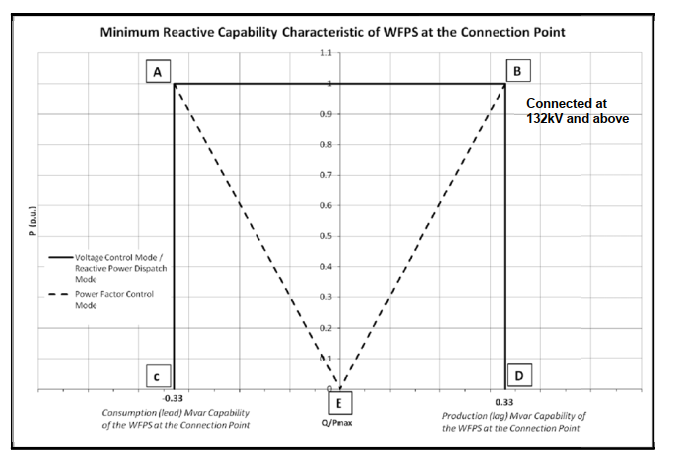 |
| 7 | Oman | 0.95 lagging to 0.95 leading | +33% to -33% of rated active power | 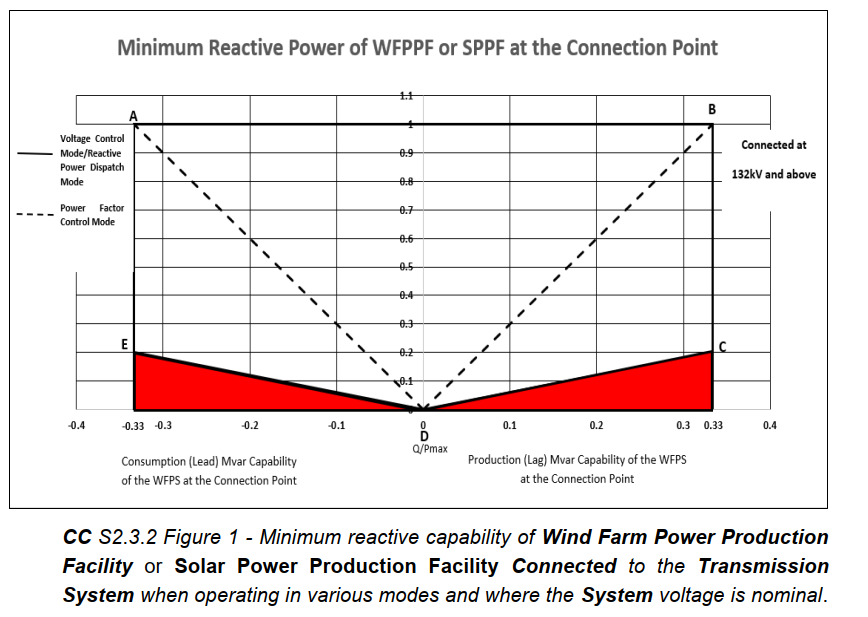 |
| 8 | Bahrain | 0.90 lagging to 0.90 leading | +48.4% to -48.4% of rated active power | 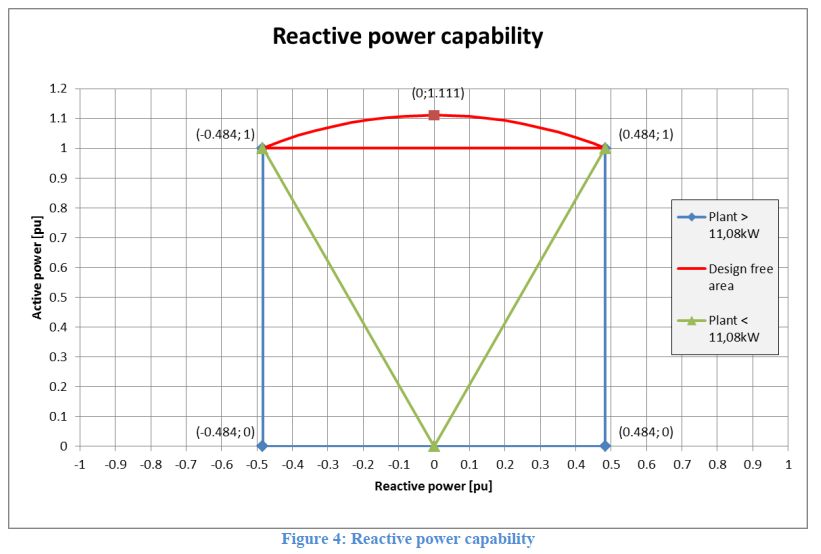 |
| 9 | Tanzania | 0.95 lagging to 0.95 leading | +33% to -33% of rated active power | 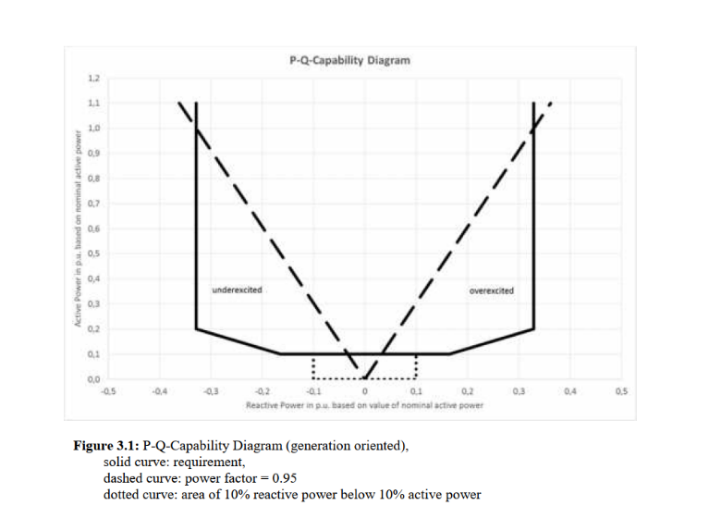 |
| 10 | Nigeria | 0.95 lagging to 0.95 leading | +33% to -33% of rated active power | 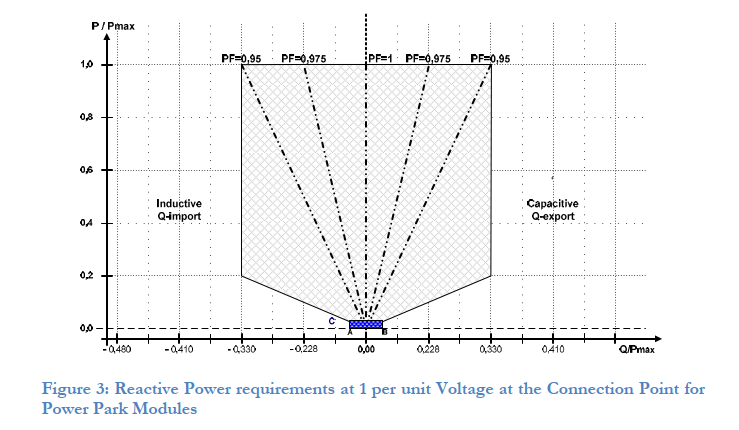 |
| 11 | South Africa | 0.95 lagging to 0.95 leading | +33% to -33% of rated active power | 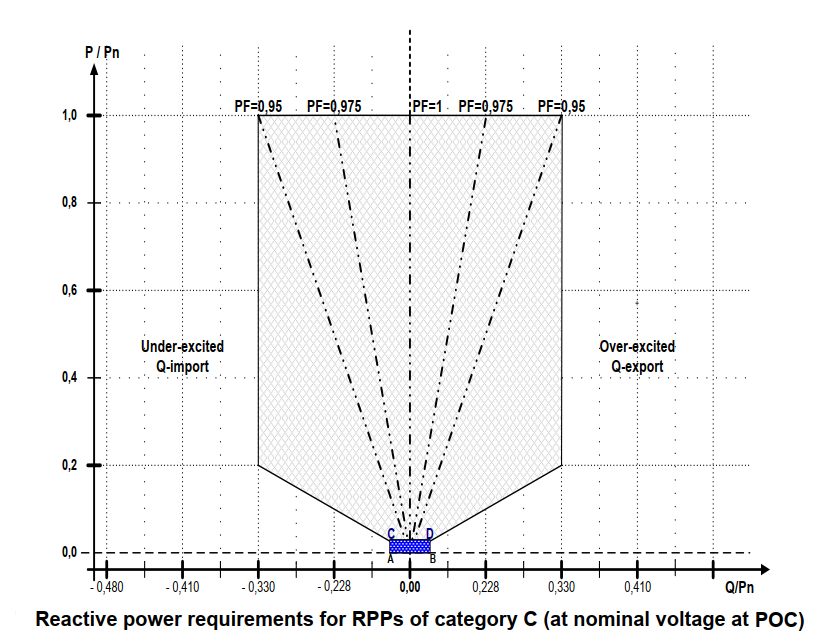 |
| 12 | Senegal | 0.95 lagging to 0.95 leading | +33% to -33% of rated active power | 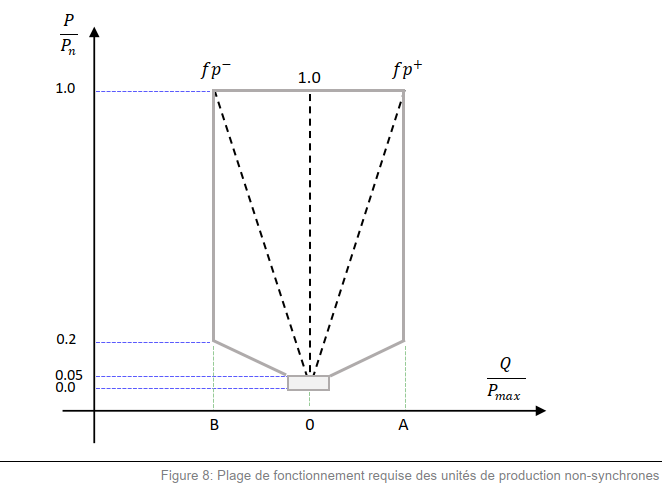 |
Conclusion
Reactive power capability is no longer optional for grid-connected renewable energy plants, as grid codes in many countries clearly define requirements through power factor limits and reactive power operating ranges. Compliance with these requirements is necessary to maintain stable grid operation and to obtain grid connection approval.
Evaluating reactive power capability at the pre-bid stage is important to clearly understand the plant’s ability to meet grid code obligations under all operating conditions. Early assessment helps identify the level of reactive power support that the plant must provide and ensures that this requirement is properly considered during initial project planning.
Including reactive power requirements in the pre-bid phase supports accurate cost estimation and financial modelling, as it avoids unexpected additions or modifications during later stages of the project. When these aspects are addressed upfront, the risk of cost overruns, design changes, and approval delays is significantly reduced.
Therefore, reactive power capability assessment should be treated as a key pre-bid consideration, allowing developers to plan budgets realistically, improve financial certainty, and ensure smooth progress through grid compliance and project execution stages.
